SEEMS Seminar with Giuseppe Sorrenti (ASE, UvA) & Burcu Küçükkeles (ABS, UvA)
- Date
- 12 June 2023
- Time
- 13:00 -14:00
- Location
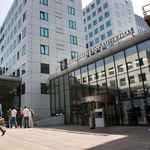
- Roeterseilandcampus - building E
- Room
- Hybrid from E0.03
Giuseppe Sorrenti (ASE, UvA) - "Talent is everywhere, opportunity is not: Online role model mentoring and students' aspirations"
We study whether it is possible to influence children's aspirations and ambitions through a classroom-based intervention. We design and implement an Online Role-model MEntoring program (ORME), which consists of exposing children to an online meeting with a male or female role model. The program is assessed through a randomized controlled trial (RCT) targeting 7th grade students (12-13 years old) in Campania, an Italian region historically plagued by stagnating economic conditions, the presence of organized crime, and a generalized lack of trust in institutions shaping lower-than-average ambitions in many children. Six months after the intervention, our findings indicate that ORME increased the likelihood of children aspiring to enroll in an academic high school and top-tier track by 4 and 8.7 percentage points, respectively. ORME also resulted in a 12.6 percentage point increase in self-efficacy and an 11.9 percentage point increase in effort.
Burcu Küçükkeles (ABS, UvA) - "Sustainability, collective action, and resources: Lessons learned from the history of Dutch water management"
In 2015, the United Nations formulated 17 Sustainable Development Goals to reduce inequality and hunger, ensure equal access to healthcare, protect the planet, and enhance prosperity in the world. To mitigate the potential effects of global humanitarian crises such as global pandemics and environmental migration, one goal above all poses critical importance: partnership for the goals (Goal 17). While it is commonly accepted that fighting against common threats requires collective action among multiple stakeholders, we know little about how resource provision and allocation decisions could be made and how resource complementarities could be achieved between different stakeholders to develop actionable solutions for societal challenges. In an attempt to contribute to a better understanding of resource provision and allocation in societal challenges in the management literature, this paper aims to develop a framework of the role and management of resources in collective action problems concerning societal challenges by analyzing the history of Dutch water management. Preliminary findings from the analysis of primary and secondary sources have several implications for the importance of cultural resources in incentivizing people to contribute to the solution of the societal problem and the relationship between different governance mechanisms and the form of collective action.
About the SEEMS Seminars
Over the past years the number of researchers at UvA Economics & Business that work on Environmental Economics and Sustainability has increased significantly. To provide a natural meeting place for them, we have started a series of Seminars on Environmental Economics and Management of Sustainability (SEEMS).
The series’ first main goal is to increase the visibility of Environmental Economics and the Management of Sustainability at UvA and the visibility of UvA within these fields. Its second main goal is to give PhD candidates working on topics in these fields access to the frontier of knowledge, and to provide them with a training ground where they can present and discuss their ideas.
Are you interested?
This will be a hybrid seminar. If you are interested in joining this seminar, please send an email to the secretariat of ASF at asf-feb@uva.nl.